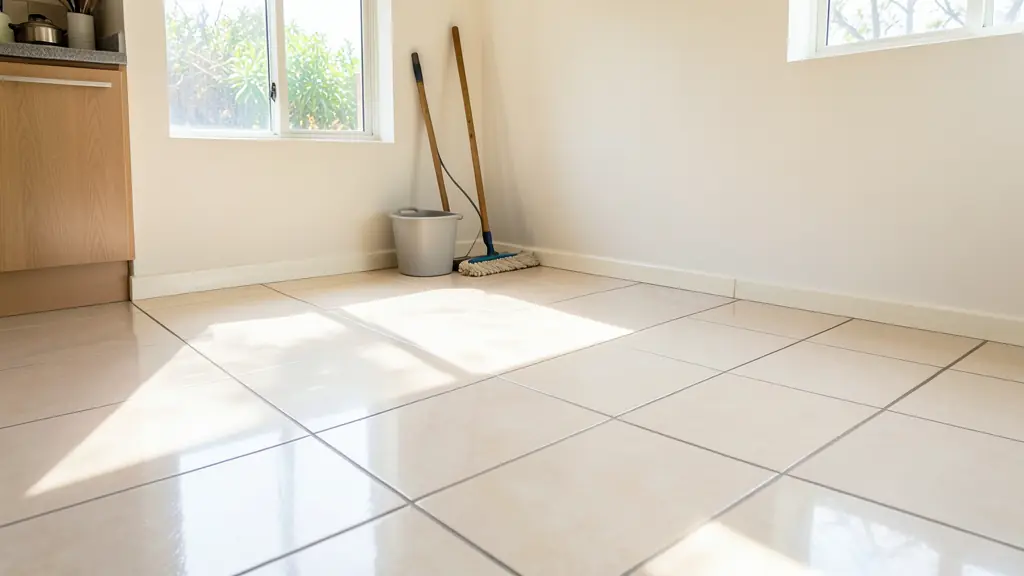
Tiles are easy to live with, but grout darkens, stone stains and a renovation leaves a cloudy film that ordinary mopping will not lift. Tile cleaning and sealing brings floors back to the look they had on the day they were laid, and protects porous surfaces such as natural stone, terracotta and grout from the next spill. Send one request with the floor type and area, and cleaning companies and tilers in your area quote you directly. It is free, and there is no obligation.
Cleaning floors, grout and the film after a renovation
Everyday cleaning needs only a neutral pH cleaner and a clean mop, rinsed often. When floors stay dirty, professionals use a rotary machine with a brush and a hot water extractor, or a steam cleaner, which lifts oils and soil from the textured surface and the grout lines. Grout is the main trap: it is porous, so a deep clean followed by a sealer keeps it from soaking up the next mess.
After a renovation, a pale cloudy haze often sits on the tiles. This is grout haze, a cement residue that dries on the glaze. It needs a mild acid-based remover used at the right dilution, and the tiles must be wetted first. Done too late or too strong, it can etch the grout or some tiles, so leave it to someone who has done it before.
Acid and alkaline cleaners: what each harms
Alkaline cleaners cut grease and are safe on most porcelain and ceramic. Acid cleaners dissolve limescale, rust and cement film, but they attack anything made of calcium carbonate:
- Marble, travertine and limestone etch and go dull on contact with acids, even mild ones such as vinegar and lemon.
- Cement grout softens and erodes if acid is left on or used too strong.
- Polished porcelain usually copes with a diluted acid, but strong products can dull the surface.
When in doubt, use a pH neutral cleaner on natural stone. See natural stone tiles for how stone is cared for.
Sealing stone, terracotta and grout
Unglazed surfaces absorb liquid, so a penetrating sealer goes in after cleaning and drying. It fills the pores without forming a film, so the tile still breathes and keeps its colour. Natural stone and unglazed terracotta are sealed before grouting and again afterwards, then resealed every one to three years depending on traffic. Test by dropping water on the floor: if it darkens the surface within a few minutes, it needs sealing again.
Grout can be sealed too, which makes dark spills wipe off more easily. Glazed ceramic and porcelain themselves do not need sealing, but a sealed grout line keeps the whole floor looking cleaner for longer.
Dull porcelain, slip and costs
Polished porcelain loses its shine when abrasive grit and harsh cleaners wear at it. A machine polish or a restoring treatment can bring some of it back. Anti-slip treatments are a surface etch that makes smooth tiles safer in bathrooms and around pools, but they change the look slightly and cannot match a tile with a proper R11 rating. Cleaning and sealing runs from about R45 to R150 per m² depending on the floor, the dirt and any stone polishing.
What to include in your request
- The tile type: porcelain, stone, terracotta
- The area to clean, in m²
- Whether the floor needs sealing
- What the problem is: stains, haze or dull
- Your suburb and when you need it done
Tile Cleaning and Sealing for different projects
- Homeowners renovating: a deep clean and reseal of the kitchen, the stoep or a stone floor
- New builds and extensions: removing grout haze and builder's dust before handover
- Landlords and body corporates: restoring tired grout and floors so the unit lets quickly
- Guesthouses, hotels and restaurants: regular machine cleaning of dining areas, lobbies and kitchens
- Shops, offices and showrooms: cleaning and resealing floors in shops and malls after hours
- Schools, clinics and public buildings: deep cleaning of classroom, clinic and passage floors during holidays
- Workshops, warehouses and gyms: degreasing tiled canteens, kitchens and ablution blocks
- Patios, stoeps and pool areas: cleaning moss and algae from stoeps and sealing terracotta or stone
Frequently asked questions
What is the best way to clean tile grout?
Can I use vinegar on my tiles?
How often should stone and terracotta be sealed?
Will cleaning remove the haze from new tiles?
Tile Cleaning and Sealing by province and city
- Johannesburg
- Pretoria
- Centurion
- Midrand
- Sandton
- Randburg
- Roodepoort
- Krugersdorp
- Randfontein
- Germiston
- Boksburg
- Benoni
- Kempton Park
- Alberton
- Vanderbijlpark
- Vereeniging
- Durban
- Pinetown
- Pietermaritzburg
- Richards Bay
- Newcastle
- Ladysmith
- Gqeberha (Port Elizabeth)
- East London
- Kariega (Uitenhage)
- Mthatha
- Cape Town
- Bellville
- Paarl
- Stellenbosch
- George
- Worcester
- eMalahleni (Witbank)
- Middelburg
- Secunda
- Mbombela (Nelspruit)
- Rustenburg
- Brits
- Klerksdorp
- Potchefstroom
- Mahikeng
- Polokwane
- Tzaneen
- Kimberley
- Upington
- Bloemfontein
- Welkom
- Sasolburg