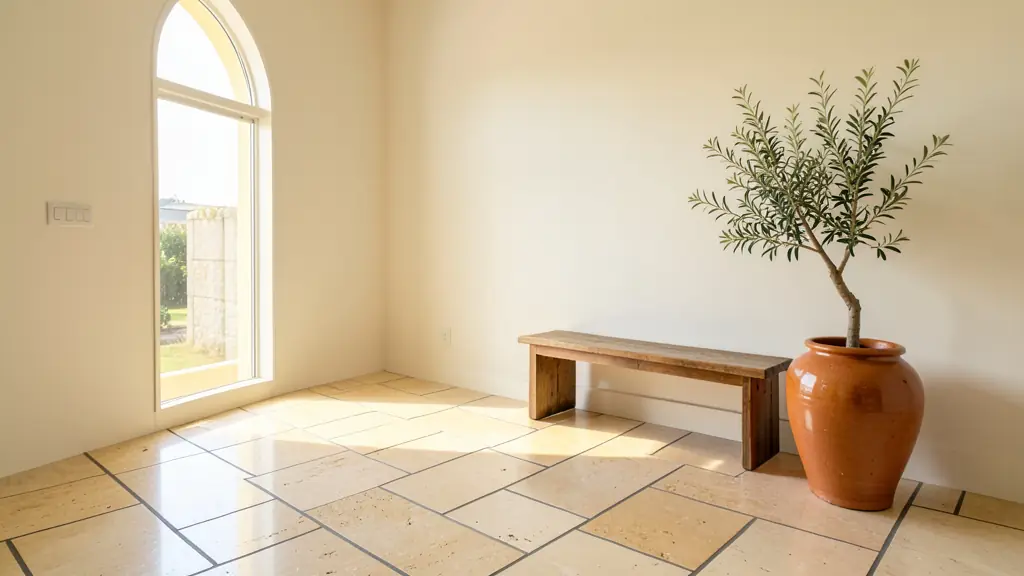
Natural stone tiles are cut from quarried rock, so no two are alike. Travertine, marble, slate, sandstone and granite all behave differently underfoot and in the wash, and each needs the right adhesive and the right care. A stone floor costs more to buy and to lay than porcelain, but it can last a lifetime and it ages well. Tell us the rooms, the area in square metres and the stone you have in mind, and stone suppliers and tilers near you quote directly. It is free and there is no obligation.
Which stone suits which room
Travertine is the warm, creamy stone seen in many Cape and Tuscan style homes. It is naturally pitted, so it is sold filled (the holes packed with resin or cement) or unfilled for a rustic look. Honed travertine is smooth and matt, tumbled has soft worn edges and suits stoeps and farmhouses. Marble is a calcium stone that etches when it meets acids such as lemon juice, vinegar and some cleaners,, so honed marble hides marks better than polished.
Slate and sandstone have a textured, naturally non-slip face that works outside and in showers. Granite is the toughest and best for high traffic and kitchens. If you are weighing stone against a manufactured look, compare it with porcelain.
Variation, sealing and weight
Stone varies in colour, veining and thickness from tile to tile and from crate to crate. Look at the whole delivery laid out dry before the tiler starts, and mix tiles from several boxes as you go so the pattern is even. Rough slate can differ in thickness by a few millimetres, which the tiler evens out with a thicker adhesive bed.
Stone is porous and needs sealing:
- A penetrating sealer before grouting stops grout pigment from staining the face.
- A second coat after grouting and a full cure protects the stone and the joints.
- Reseal about every one to three years, and test with a few drops of water: if they darken the stone, it is time.
Stone is also heavy, around 25 to 30 kg per m² for 10 mm tiles, which matters on timber floors and upper storeys. See tile cleaning and sealing for what to use and what to avoid.
Laying stone properly
Pale marble and light travertine can show a grey adhesive through the stone, so tilers use a white cementitious adhesive. Large tiles need full back-buttering so no hollow patches are left under the stone, which is where cracks start.
Joints are usually 2 to 5 mm for honed and tumbled stone, wider for rough slate. Grout colour should be chosen to sit close to the stone. Cutting needs a wet saw with a diamond blade, and wet cutting and a dust mask matter because stone dust contains silica.
What stone costs
Prices vary widely with the stone, the finish and where it comes from. Expect a rough 2026 range of R350 to R1,500 per m² for the tiles, with imported marble at the top. Laying stone costs more than laying ceramic, often R250 to R450 per m², because of the cutting, sealing and care. Ask each supplier for the price per m² including VAT, the thickness, and whether sealer and adhesive are included. Our floor tile price guide shows how stone compares with other tiles.
What to include in your request
- Which stone you want, or send a photo
- Rooms and the area in m²
- Honed, polished, tumbled or textured
- Sealing before and after grouting
- Your suburb and the floor it goes on
Natural Stone Tiles for different projects
- Homeowners renovating: a stone entrance hall, a travertine lounge floor or a marble bathroom
- New builds and extensions: stone floors and cladding specified from the plans and ordered as one batch
- Landlords and body corporates: durable slate or granite in entrances, usually only in higher end lets
- Guesthouses, hotels and restaurants: travertine and slate for lodge floors, reception areas and bathrooms
- Shops, offices and showrooms: polished granite or marble for showrooms, banks and boutique entrances
- Schools, clinics and public buildings: hard granite and honed stone in church floors and public building entrances
- Workshops, warehouses and gyms: rarely used, but granite is chosen for tough entrances and boardrooms
- Patios, stoeps and pool areas: slate and sandstone for patios, stoeps and pool surrounds with good grip
Frequently asked questions
Is travertine a good floor for a South African home?
Will marble stain or scratch?
Can I use natural stone outside?
How long should I wait before sealing?
Natural Stone Tiles by province and city
- Johannesburg
- Pretoria
- Centurion
- Midrand
- Sandton
- Randburg
- Roodepoort
- Krugersdorp
- Randfontein
- Germiston
- Boksburg
- Benoni
- Kempton Park
- Alberton
- Vanderbijlpark
- Vereeniging
- Durban
- Pinetown
- Pietermaritzburg
- Richards Bay
- Newcastle
- Ladysmith
- Gqeberha (Port Elizabeth)
- East London
- Kariega (Uitenhage)
- Mthatha
- Cape Town
- Bellville
- Paarl
- Stellenbosch
- George
- Worcester
- eMalahleni (Witbank)
- Middelburg
- Secunda
- Mbombela (Nelspruit)
- Rustenburg
- Brits
- Klerksdorp
- Potchefstroom
- Mahikeng
- Polokwane
- Tzaneen
- Kimberley
- Upington
- Bloemfontein
- Welkom
- Sasolburg