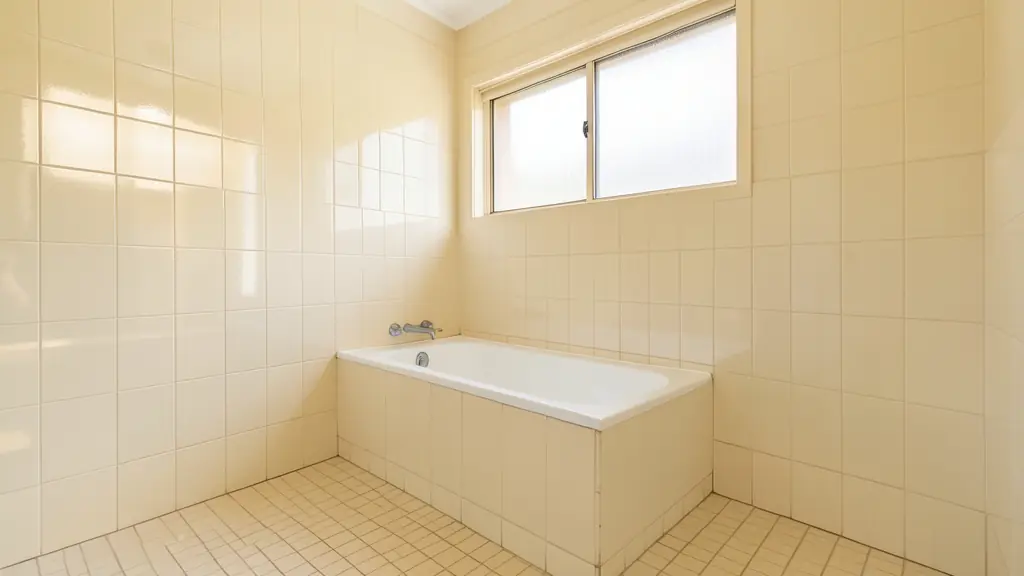
Ceramic tiles are the budget friendly choice for South African homes. They are made from natural clay with a glazed face, so they come in a huge range of colours, gloss levels and patterns, and they cost noticeably less than porcelain. They are well suited to bedrooms, studies and bathroom walls. One request with your room sizes brings quotes from local suppliers and tilers, for tiles alone, laying alone or both. It is free, and there is no obligation to accept any quote.
Red-body and white-body ceramic
Look at the back of a ceramic tile and you will see the body. Red-body tiles are made from darker clay, are usually thicker and cheaper, and are fired at a lower temperature. White-body tiles are made from lighter clay, are cut more precisely and take sharper colours, which is why many wall tiles use them.
The glaze is the working surface. Ask for the PEI rating: PEI 2 suits walls and bedroom floors, PEI 3 suits most living areas, and PEI 4 is the minimum for entrances and kitchens. A ceramic tile with no PEI rating is meant for walls only and will scratch quickly on a floor.
Where ceramic is fine, and where it is not
Ceramic absorbs more water than porcelain, often 3% to 10%. That makes it a good fit where conditions stay mild:
- Bedrooms, studies and passages with light foot traffic.
- Bathroom and kitchen walls, including splashbacks.
- Rental units where cost matters and tiles may be replaced between tenants.
Avoid ceramic outside, especially on the Highveld, where water in the body freezes and chips the glaze. It is also a poor match for busy shops, garages or canteens, where dragged furniture and grit wear the glaze through. For those jobs look at porcelain tiles instead.
Joints, edges and chipping
Most ceramic has a slightly rounded cushion edge rather than the sharp rectified edge on porcelain. The tile sizes also vary a little more from box to box, so the joint should be wider, usually 3 mm to 5 mm, and the grout line becomes part of the look. Check the calibre and shade codes on every box, and open a few boxes before laying to mix them.
The glaze can chip at the edges if a tile is dropped or a cutter is rough, so allow 10% extra for breakage and keep spares. A chip on a floor tile cannot be polished out, only filled or replaced. Use a wet saw or a good manual cutter, and a notched trowel suited to the tile size. See tile repairs for fixing chips and cracks later.
Budget and quotes
A rough 2026 guide is R90 to R300 per m² for ceramic tiles, with most home floors falling between R120 and R220. Laying costs about R160 to R380 per m², so the saving on the tile is smaller than it first looks if the area is large. Ask for quotes that name the same size and PEI rating, and include adhesive, grout, trims and delivery. For wall jobs see wall tiles.
What to include in your request
- Rooms and wall or floor area in m²
- Gloss or matt, and the colour you like
- Tile size and the PEI rating needed
- Tiles only, laying only, or both
- Your suburb and when you need it done
Ceramic Tiles for different projects
- Homeowners renovating: budget bedroom floors, bathroom walls and kitchen splashbacks in plenty of colours
- New builds and extensions: affordable wall and floor tiles for houses and units priced in bulk from the plans
- Landlords and body corporates: cost-effective tiles for flats and rooms that are easy to replace between tenants
- Guesthouses, hotels and restaurants: glazed wall tiles for en-suites and guest bathrooms, with porcelain on busy floors
- Shops, offices and showrooms: wall cladding and light-traffic floors in offices, stockrooms and small shops
- Schools, clinics and public buildings: easy-wipe glazed wall tiles for clinics, ablutions and school toilets
- Workshops, warehouses and gyms: wall tiles in canteens and washrooms, with tougher tiles kept for floors
- Patios, stoeps and pool areas: better avoided in frost areas, with porcelain used on stoeps and patios
Frequently asked questions
What is the difference between ceramic and porcelain tiles?
Can I use ceramic tiles on a floor?
Why do ceramic floor tiles chip?
Are glossy ceramic tiles slippery?
Ceramic Tiles by province and city
- Johannesburg
- Pretoria
- Centurion
- Midrand
- Sandton
- Randburg
- Roodepoort
- Krugersdorp
- Randfontein
- Germiston
- Boksburg
- Benoni
- Kempton Park
- Alberton
- Vanderbijlpark
- Vereeniging
- Durban
- Pinetown
- Pietermaritzburg
- Richards Bay
- Newcastle
- Ladysmith
- Gqeberha (Port Elizabeth)
- East London
- Kariega (Uitenhage)
- Mthatha
- Cape Town
- Bellville
- Paarl
- Stellenbosch
- George
- Worcester
- eMalahleni (Witbank)
- Middelburg
- Secunda
- Mbombela (Nelspruit)
- Rustenburg
- Brits
- Klerksdorp
- Potchefstroom
- Mahikeng
- Polokwane
- Tzaneen
- Kimberley
- Upington
- Bloemfontein
- Welkom
- Sasolburg