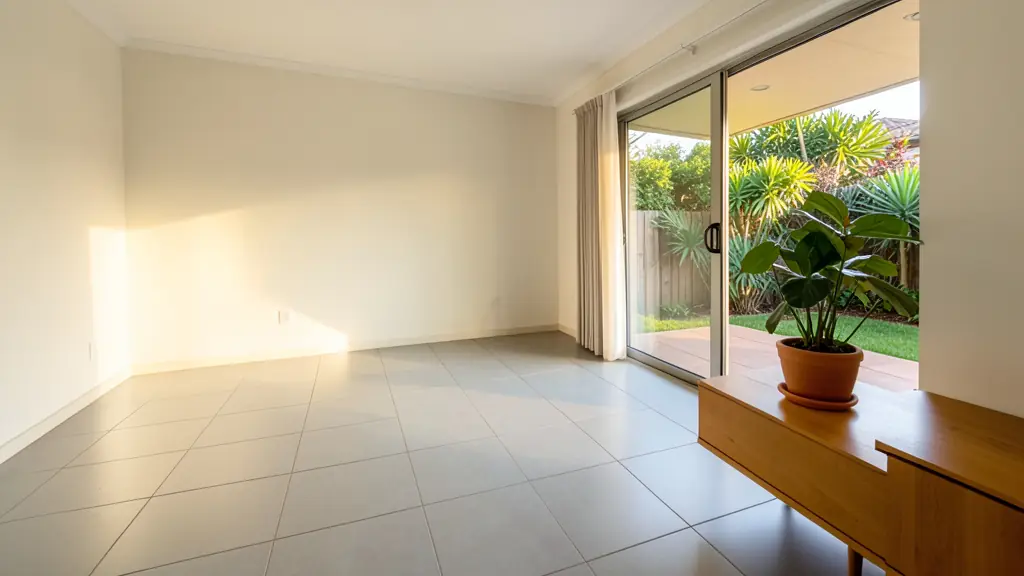
Floor tiles are the most common floor finish in South African homes, and for good reason: they cope with sand, mud, pets and summer heat, and a good floor lasts thirty years or more. The choice is wide, from budget ceramic and hard-wearing porcelain to wood-look planks, natural stone and terrazzo. Send one request with the rooms, the size in square metres and the look you want, and tile suppliers and tilers in your area quote you directly. You can ask for the tiles only, the laying only, or both. It is free and there is no obligation.
Choosing the right floor tile
Most floors today are porcelain: it is dense, absorbs less than 0.5% water and stands up to heavy traffic, so it suits lounges, kitchens, passages and covered patios. Ceramic floor tiles cost less and are fine in bedrooms and bathrooms with lighter wear. For the warmth of timber without the upkeep, wood-look tiles come as long planks.
Look at three things on the box or the spec sheet:
- Wear rating (PEI 1 to 5) for glazed tiles: PEI 3 for most homes, PEI 4 for kitchens, entrances and busy shops.
- Slip rating (R9 to R13): matt R10 indoors is usually fine, and R11 or higher for wet areas, ramps and around the pool.
- Rectified edges, which are machine cut so the tiles can be laid with a 2 mm grout joint for a cleaner look.
How much to order
Measure each room in metres, multiply length by width and add the rooms together. Then add 10% for cuts and breakage on a straight lay, or 15% for a diagonal or herringbone pattern. Tiles are sold by the box, and a box of 600 x 600 tiles usually holds four tiles, which covers 1.44 m². Our quote form works this out for you from the room size and the tile size.
Buy everything from the same batch (the shade and calibre code printed on the box) so the colour and size match, and keep a box of spares for repairs later. A tile range can be discontinued within a few years.
What good laying looks like
A good floor starts with the base. The screed must be flat, dry and sound: new screed should cure for about a week per 25 mm before tiling. Old tiles can sometimes be tiled over if they are firmly bonded, but loose or hollow tiles must come up first. Ask your tiler about:
- The adhesive to be used, with full coverage under large tiles (back-buttering) so there are no hollow spots.
- Movement joints at the walls and across large areas, filled with flexible sealant rather than grout, so the floor doesn't lift in summer heat.
- A levelling clip system for large format tiles, so the edges sit flush.
Floors that pop or crack a few years later are almost always due to missing movement joints or poor adhesive coverage. See tile repairs if yours already has.
Getting quotes you can compare
Tile prices are quoted per square metre, and so is laying. Check that every quote covers the same things: lifting and removing old flooring, levelling the screed, adhesive and grout, skirting, trims at doorways, cutting around fittings and cleaning up. Ask whether the price is for supply only, laying only or both, and when the tiles can be delivered. A rough 2026 guide: R150 to R650 per m² for most tiles, plus R160 to R380 per m² to lay them. Our floor tile price guide has worked examples.
What to include in your request
- Rooms to tile and the size in m²
- The look, colour and tile size you like
- Tiles only, laying only, or both
- What is on the floor now
- Your suburb and when you need it done
Floor Tiles for different projects
- Homeowners renovating: a new floor through the lounge, kitchen and passage, or one bathroom at a time
- New builds and extensions: floors for the whole house quoted from the plans, delivered to site in phases
- Landlords and body corporates: hard-wearing mid-range tiles that survive tenants and are easy to match later
- Guesthouses, hotels and restaurants: durable non-slip floors for guest rooms, dining areas, kitchens and stoeps
- Shops, offices and showrooms: large format porcelain in shops, offices and showrooms with heavy foot traffic
- Schools, clinics and public buildings: slip-resistant, easy-clean floors for classrooms, clinics and passages
- Workshops, warehouses and gyms: heavy-duty tiles for workshops, canteens, ablutions and loading areas
- Patios, stoeps and pool areas: frost-resistant non-slip tiles for patios, stoeps, braai areas and pool surrounds
Frequently asked questions
Do you sell tiles or do the tiling yourselves?
How many tiles do I need for a room?
Can new tiles be laid over old ones?
How long does it take to tile a floor?
Floor Tiles by province and city
- Johannesburg
- Pretoria
- Centurion
- Midrand
- Sandton
- Randburg
- Roodepoort
- Krugersdorp
- Randfontein
- Germiston
- Boksburg
- Benoni
- Kempton Park
- Alberton
- Vanderbijlpark
- Vereeniging
- Durban
- Pinetown
- Pietermaritzburg
- Richards Bay
- Newcastle
- Ladysmith
- Gqeberha (Port Elizabeth)
- East London
- Kariega (Uitenhage)
- Mthatha
- Cape Town
- Bellville
- Paarl
- Stellenbosch
- George
- Worcester
- eMalahleni (Witbank)
- Middelburg
- Secunda
- Mbombela (Nelspruit)
- Rustenburg
- Brits
- Klerksdorp
- Potchefstroom
- Mahikeng
- Polokwane
- Tzaneen
- Kimberley
- Upington
- Bloemfontein
- Welkom
- Sasolburg